Sankofa
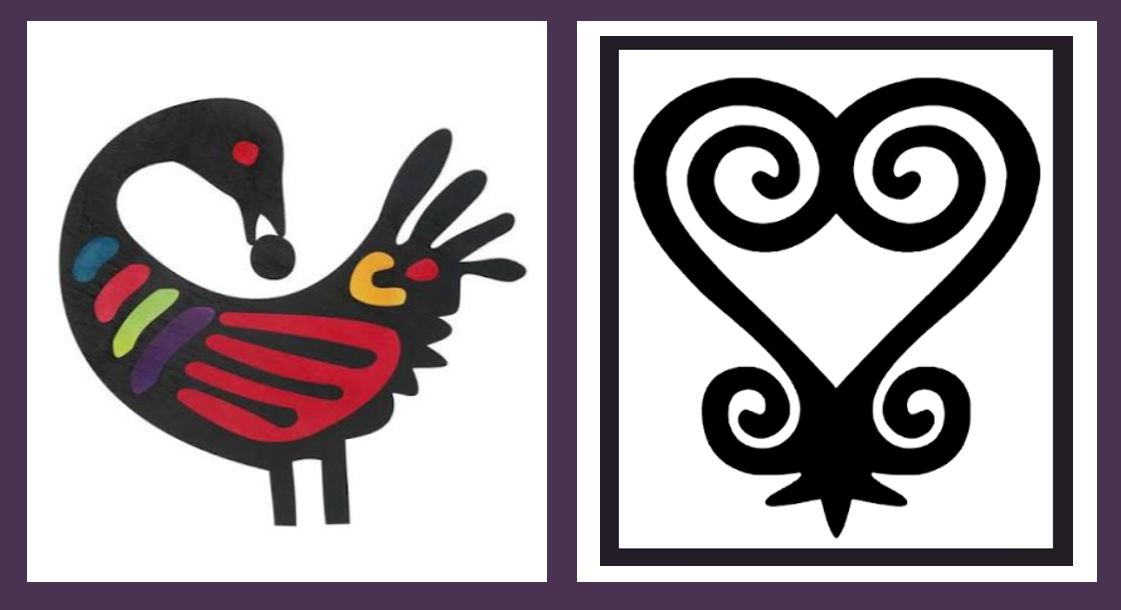
I know. Some of you are thinking, “There he goes with the coffee again!” Sorry to ‘disappoint’ but read that title word again. In a minute, I’ll tell you what it means.
“Those who forget history are doomed to repeat it.”
We use this (and similar statements) every so often to remind ourselves that we should learn from past mistakes. Sounds like good advice, yeah? Keep that in mind and let’s journey back a few years.
- 1750: Edmund Burke wrote Reflections on the Revolution in France. In this piece he says, “People will not look forward to prosperity, who never look backward to their ancestors.”
- 1837: Lectures on the Philosophy of History, written by Philosopher Georg Wilhelm Friedrich Hegel penned, “The only thing we learn from history is that we learn nothing from history.” A bit of pessimism, anyone? Maybe he was reading the Book of Ecclesiastes when we’re told that everything is meaningless, vapor, futile, useless, vane, or smoke depending how those verses are translated.
- 1852: Just a few years later, Karl Marx seems to agree with Mr. Hegel when he says, “History repeats itself first as tragedy, second as farce.” (The Eighteenth Brumaire of Louis Bonaparte, an essay). Well, I’m told that the farce is because repetition is not the passionate original but simply a tired copy.
- 1905: George Santayana is credited as the originator for our current phrase in his book, The Life of Reason: Reason in Common Sense. Even the title says I should pick up a copy. Anyway, his words were, “Those who cannot remember the past are condemned to repeat it.” Maybe we prefer "doomed" over "condemned". I can live with that.
- 1948. Winston Churchill said, “Those who fail to learn from history are doomed to repeat it.” I’m sure his intention was very specific given what was going on at the time. “Cannot remember” is a bit different than “fail to learn”. One might be excusable, the other looks deliberate.
- 2026. Since it seems that for nearly 300 years, we’ve been trying to learn this lesson, I would like your opinion: How are we doing?
Our current use of the phrase warns us that we forget or ignore history at our own peril. Those believing nothing matters at all get a pass.
By now you must be ready for the “big reveal” that was promised above. Here goes.
“Go back and get it!”
That is the simplest way to translate Sankofa. The Twi/Akan language created this word: San (to return), Ko (to go), and Fa (to fetch). As the Akan (a major ethnic group in Western Africa, specifically Ghana) has been around for centuries, this type of philosophy was passed down orally, thus an origination date is unavailable. Let’s just say it significantly predates the 1700s.
There is an interesting twist developing here. The words, although similar, seem to follow different paths. Let me explain.
The Anka looked at history in a positive, helpful way. In fact, it was considered a duty to go back and get it. They believed, like Edmund Burke, that for the tribe to prosper, they must pay attention to the success and failures of the past. They also developed the Sankofa Bird and the Sankofa Heart. Both symbolize life as looking back at the past while also looking forward to the future - at the same time.
I think we have missed the point in our world. We use our ‘history’ quote to warn, chastise, and threaten the future if we fail. The Anka’s thought looks to a better future dependent on the past.
Maybe I’m splitting hairs, but it decidedly shapes my perspective. We dwell on the punishment aspect. The Anka dwells on positive lessons for future prosperity.
Maybe, because of this differing worldview, we have seen in today's world, the desire of many to erase history, downplaying, covering up, and discarding those moments when we have been less than we could have been, knowing in our hearts that we’ve fallen short of what we wish to be.
But, instead of going back to get it, we prefer to bury those eras under an accepted (thoughtfully purposeful or not) collective ignorance that allows us to lift ourselves up and celebrate a clean and uninterrupted historical flawlessness.
Individually, most of us could not subscribe to perfectness. We know that to improve, we have to know what areas of our lives need improvement. If we need to improve, we need to recognize what we’ve done that missed the goals of how we see ourselves. Then we get to work.
I think this is what the Anka people do. They look at what’s happened, see if it’s what they wish of themselves, and then get to work.
Could any culture, nation, or community live up to a perfect history? Should any culture, nation, or community adopt this stance?
Well, I admit that communities of any size are difficult to turn. I’ll admit the same for individuals. But I will start with the Sermon on the Mount (Matthew 5 through 7).
Then, I’m going to get to work.
The Image: The Sankofa Bird is a mythical bird with its feet planted forward while its head is turned backward to gently retrieve an egg from its back or mouth, symbolizing the wisdom of reaching into the past. The Stylized Heart Shape is an alternative representation of the same concept.