Knee-jerk Responses
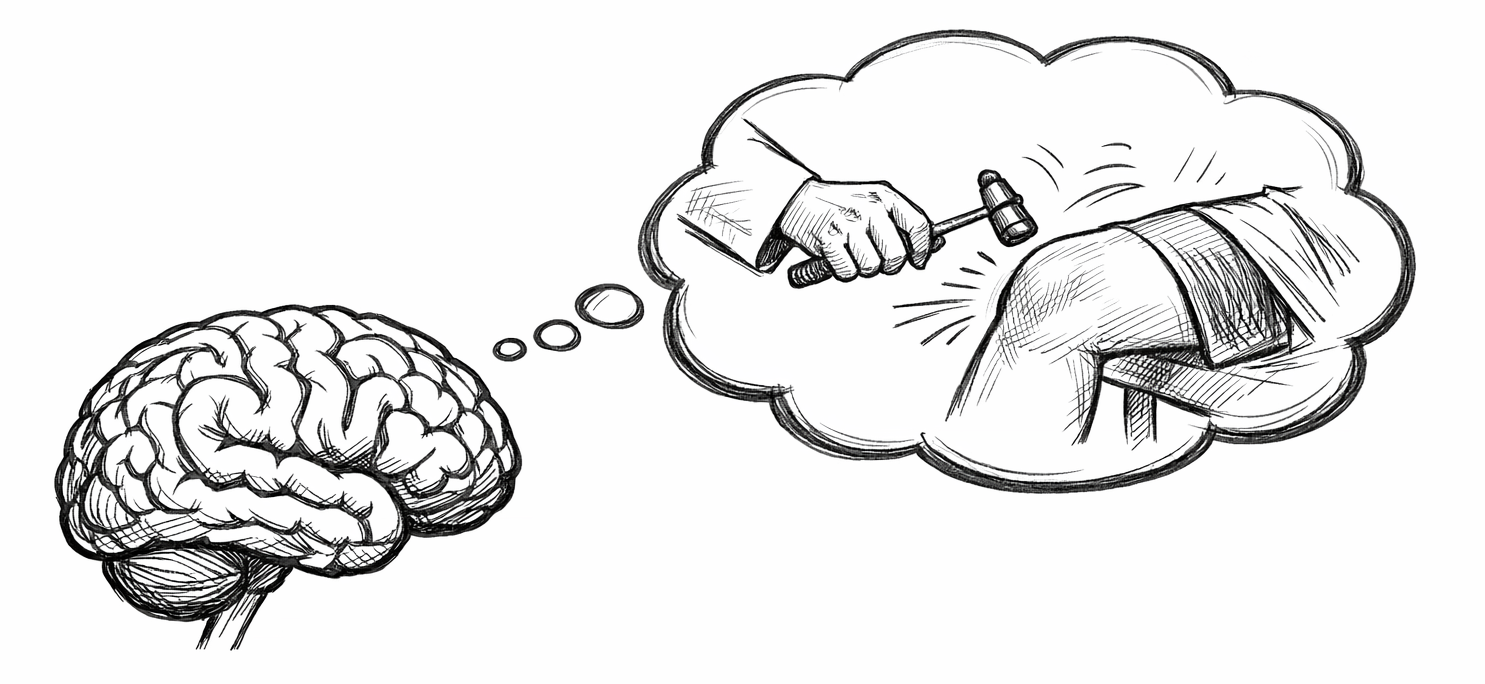
“Don’t run with that knife!”
A television show. The protagonist is chasing his nemesis. But the good guy is holding a knife! The quote above screamed through a voiceless consciousness. No forethought. No careful analysis. Just the conviction – immediate and determined. (Whether I am alone or with others, I make it a point never to scream at a screen.)
During my childhood, I was reminded on more than several occasions that running with sharp items is dangerous. Those past warnings were immediate, determined, and certainly not voiceless. Urgent admonitions had effectively been drilled deep into my unconscious behavior. I will never hurt myself by running with a knife and I stand very still when slicing tomatoes.
That’s a good thing, right?
But this instinctive response to the television scene surprised me. I questioned how many other phrases have been so deeply ingrained into my psyche as to be mechanized and spontaneous in nature. The internal interrogation also probed whether these knee-jerk functions are always good things.
There is no doubt that running with sharp instruments can be harmful. Here are a few more that are certainly beneficial.
- Look both ways before crossing the street.
- Stop. Drop. Roll.
- Better safe than sorry.
- Measure twice, cut once.
At first glance, the following "installed" reactions seem benign. Upon further discovery, several items minimize grief, some are discriminatory, and others reinforce demeaning stereotypical standards that are common throughout history.
- Man up.
- Boys don’t cry.
- Off the Reservation.
- Bottom of the totem pole.
- What doesn’t kill you makes you stronger.
- Bulldoze your way.
- It could be worse.
- Time heals everything.
There is no doubt that I would be doing myself a favor in paying close attention to these entrenched thoughts and mantra-like vocalizations. That short list of harmful words is probably just the tip of automatic thought patterns that harm me and others.
We can, and should, take this a step further. Many of us have grown up with some form of religion. Instilled in us from an early age, we are taught morals, ethics, spirituality, and devotions that are designed to help us be good people.
Inside of this religiosity, we have these same intrinsic interpretations of the world around us and use language in identical ways. Some of these are helpful, and yet some harm – again, just like the earlier examples.
I believe that we have all heard and perhaps used the following platitudes to comfort, or to explain things that can’t be explained. But if you think about these common phrases, they don’t exactly follow the Hippocratic Oath mandating ‘do no harm.’
- God won’t give you more than you can handle.
- God needed another angel.
- Cleanliness is next to Godliness.
- God helps those who help themselves
- When God closes a door, He opens a window.
- You can’t outgive God.
- God Said it. I believe it. That settles it.
- I’ll pray about it.
- Let go and let God.
- Everything happens for a reason.
- Just have faith.
Within this list, I have researched why many are considered harmful. The studies are not itemized today as my only goal is to promote an awareness that many of our thoughts, actions, and words have been programmed into our psyche and are now unconsciously used as truthful and helpful. Our confidence aside, we nevertheless hurt the very people we wish to help.
Purposefully, my research notes are absent in the hope that you’ll spend some time discovering your personal verbal habits that might prove to be a disservice to yourself and others when using knee-jerk, preprogrammed language.
It takes deliberate and significant effort to understand and then to change our go-to reactions. As encouragement, one example is provided below.
Bulldoze.
I have always thought it meant forging through difficult issues by pushing through like a snowplow, encouraging strength to keep going and conquer. Bulldoze seemed to be a positive influence as it was teaching perseverance.
But here’s what I discovered. The term originated in the 1870’s. Etymology suggests it was derived from “bull dose”, a term implying a large measure of physical punishment - in particular, beating black voters.
Additionally, even using the terminology promoted by large machinery to clear land (and snow), it represents ignoring input from others through intimidation along with an aggressive force seeking only personal success.
From a simple word, so much is communicated, and most of it is not at all what I thought.
Suggestions to start your research. Of course, a simple Google Search or AI interaction works as well.